
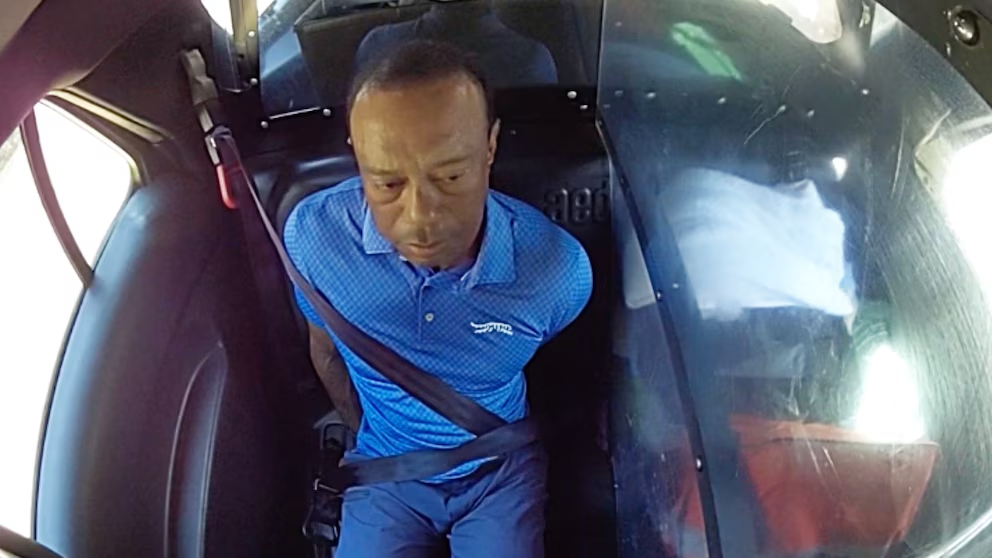
Body camera footage released this week shows golf icon Tiger Woods in a dazed and confused state moments after a crash that led to his arrest in Florida.
The incident happened on March 27 on a quiet stretch of road in Jupiter Island. Investigators say Woods’ vehicle hit the back of a truck before flipping onto its side. No one was hurt, but what followed quickly raised concerns for officers on the scene.
In the footage, Woods is seen trying to explain what happened, saying he had been adjusting his radio and glanced at his phone just before the impact. The realization of the crash, he suggested, came almost instantly after.
But it wasn’t just the crash that caught attention. As deputies spoke with him, Woods appeared unsteady and at times unfocused. During roadside tests, he struggled to follow instructions, and officers had to repeat directions more than once. At one point, when he was told he was being arrested, his reaction was simple: he seemed genuinely surprised.
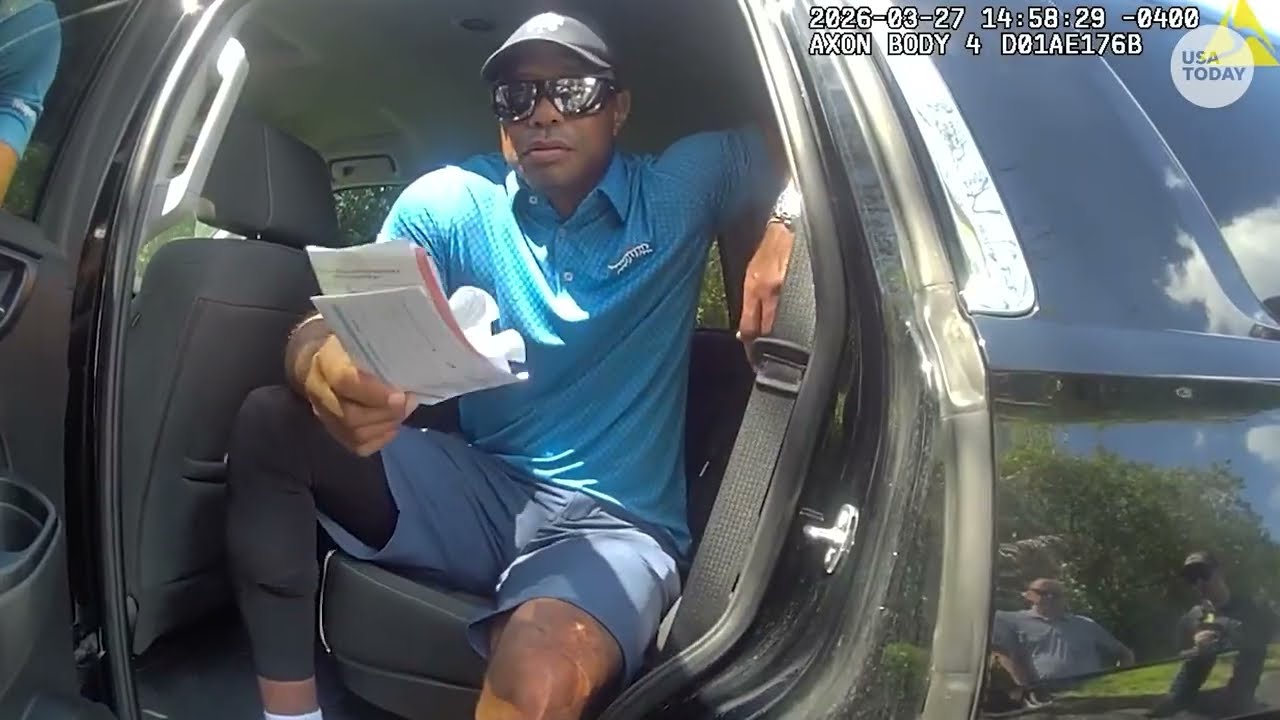
After placing him in handcuffs, officers checked his pockets and pulled out two pills. Woods identified them as Norco, a prescription pain medication. Authorities later confirmed the drug contained hydrocodone.
Video from inside the patrol car adds another layer to the situation. Woods is seen in the back seat, quiet but clearly not fully alert, yawning, hiccuping, and at times appearing to drift off during the ride.
At the station, Woods insisted alcohol was not a factor. He told officers he had taken medication earlier in the day. A breath test backed that up, showing no alcohol in his system. However, he declined to take a urine test, which officers noted.
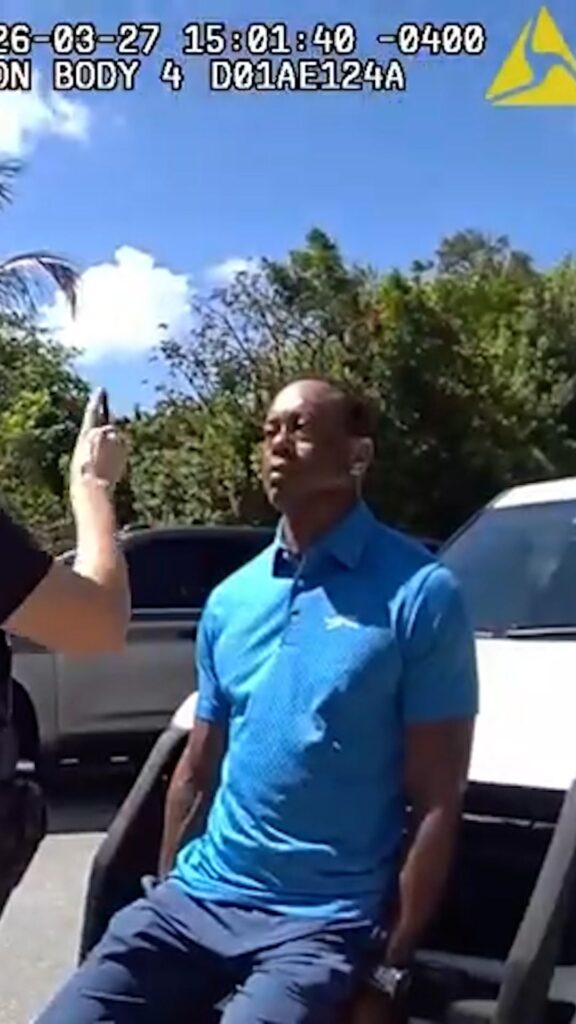
Woods has since pleaded not guilty and said he plans to step away from golf for the time being to focus on his health.
His physical condition also came up during the encounter. He told deputies about his long history of surgeries, including multiple procedures on his back and right leg. Officers observed that he was limping and had difficulty with balance during testing.
Authorities say their decision to arrest him came down to what they saw firsthand, his behavior, his responses, and how he performed during the evaluation at the scene.
