
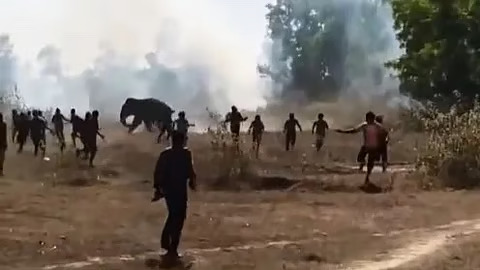
A wild bull elephant has killed almost two dozen people and left 15 others nursing injuries. The attack occurred across several communities in eastern India. Reports say the large single-tusked male elephant has been on a 10-day rampage, during which it attacked without warning and forced residents to take extreme measures to stay alive.
The deadly trail began on New Year’s Day in the village of Bandijhari, located in Jharkhand’s West Singhbhum district. A 35-year-old man became the first known victim when the elephant struck unexpectedly. The victim had family in the neighbouring town of Sowan, where the large animal was terrorising four days later. After the attack, five of the 35-year-old man’s relatives were confirmed dead.

Over the following days, the animal continued its destructive path, moving mainly at night and covering long distances as it slipped through rural communities. The Times of India reported that the animal struck again in Barbaria the day after the second attack. In this incident, five other people were killed. Among the deceased is a married couple and their two children. By the end of the rampage, nearly two dozen deaths had been recorded, with multiple others left injured.
Forest officials say the elephant has been travelling as much as 25 miles per day, making it difficult to track and contain. Authorities say the elephant has been moving quickly through the forest, evading repeated efforts by wildlife teams to subdue it.
According to officials, the elephant appears to be in musth, which makes elephants extremely aggressive, restless, and prone to sudden attacks. Musth is a natural biological phase that male elephants experience due to a sharp rise in testosterone.

Since the attacks, villagers in the areas that suffered the most have been living in fear. At night, many residents avoided staying inside their homes, opting instead to sit on rooftops or climb trees to stay safe. Families remained alert throughout the darkness, straining to hear any sounds of crashing walls or heavy footsteps as the elephant prowled near the forest.
Authorities have mobilised over 300 forest and wildlife officers with trackers, tranquilisers, and drones in a coordinated effort to track and contain the elephant. They reported that the elephant has been difficult to capture because it mostly moves through isolated villages at night. Furthermore, when they do encounter the large animal and try to sedate it with dart guns, they are repeatedly forced to stop because the animal becomes riled up and could bring more harm to nearby residents.